
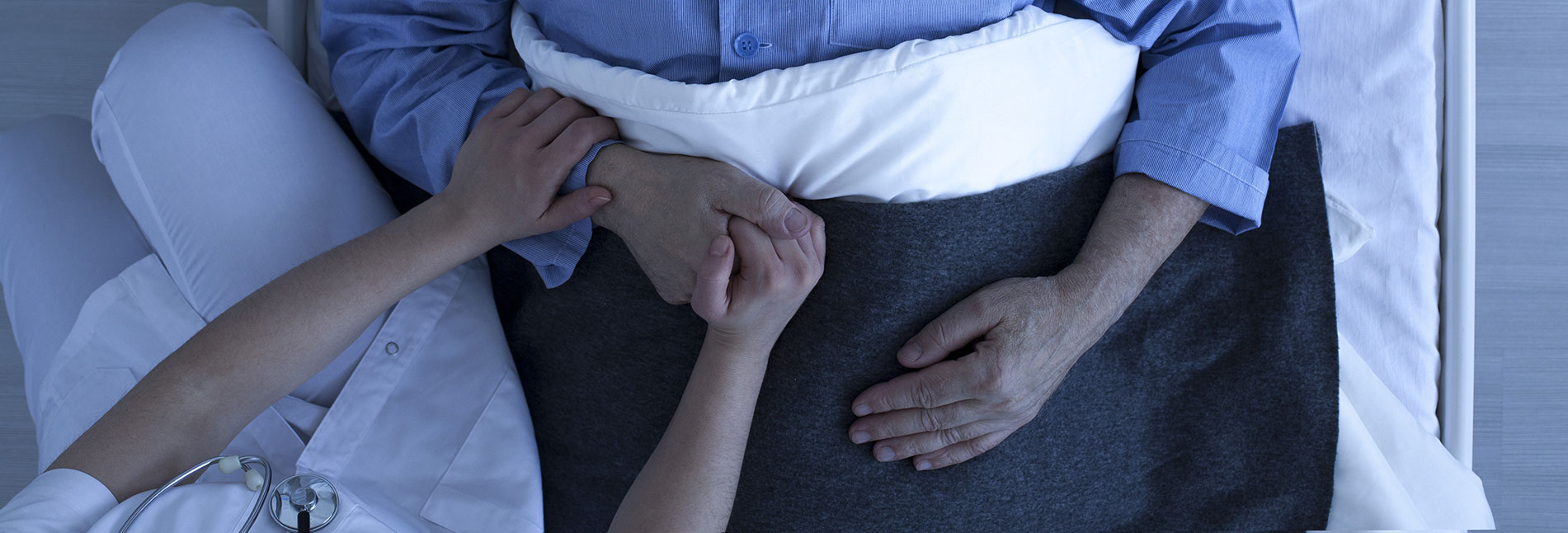
When a person dies, the heart and breathing stop, the muscles relax, and the body cools and stiffens over the following hours.
Our team supports San Diego families through the minutes and hours after a death. Each change in the body has a plain explanation, and knowing those explanations ahead of time makes the room feel less frightening.
Key Highlights
- The heart can keep beating for a few minutes after breathing stops.
- A body cools by about 1.5°F per hour and matches the room in 18 to 24 hours.
- Blood settling shows on the skin about 1 hour after death and sets within 6 to 8 hours.
- Stiffening starts in the face within 1 to 4 hours and reaches the whole body by about 12 hours.
- After a death at home, the body does not need to be moved right away.
What Happens to the Body at the Moment of Death?
At the moment of death, breathing stops, the heart stops soon after, and the brain no longer directs the body.
Death rarely arrives as one clear instant. After the last breath, the heart may beat for a few minutes, and a few muscle contractions or a brief seizure can occur. The chest may also heave as though another breath is coming.
Clinicians describe these movements as an expected part of the moment of death. Knowing they can happen makes them less alarming to see.
A nurse confirms a death by checking for a pulse, for breath, for reflexes, and for pupils that react to light.
The table below sets common assumptions beside what clinicians describe.
| What families often assume | What happens |
| Death is a single instant | The heart may beat for a few minutes after breathing stops |
| Movement after the last breath means something is wrong | A few muscle contractions and a heaving chest are a described part of the moment of death |
| Dark patches on the skin are bruises | Blood settles with gravity and shows through the skin about 1 hour after death |
| Stiffness is permanent | Stiffness holds for about 12 hours once complete, then eases |
| The body must be moved right away | A body at home does not need to be moved right away |
| The body is unsafe to touch | Touching and holding the body is fine unless a contagious disease poses a risk |
What Happens to the Body as Death Approaches?
In the final days, the body slows down in stages. Sleep deepens, appetite fades, hands and feet cool, and breathing turns irregular with long pauses. Our guide to what the last 24 hours can look like covers the late signs in detail, and transitioning describes the wider slowdown that can stretch across days or weeks.
Does the Brain Keep Working After Death?
The brain can stay active for a short time after the heart stops. Brain activity may continue for several minutes after a person has been declared dead. Activity of that kind is different from consciousness, and it does not mean a person is aware that they have died. Families can keep speaking to their loved one if it brings comfort.
What Happens to the Body in the First Hours After Death?
In the first hours after death, the muscles relax, the body cools, blood settles toward the lowest points, and the muscles then stiffen.
Timings in this section are typical ranges. Room temperature, body size, and clothing all shift them.
Muscles relax. Every muscle loosens right after death, including the muscles that hold the bladder and bowel closed. The skin may also sag slightly, which can change how the face looks.
The body cools. Body temperature falls by about 1.5°F per hour until it matches the room, which typically takes 18 to 24 hours. A cup of tea left on the counter does the same thing, giving up heat until it reaches the temperature of the kitchen around it. A body under blankets cools more slowly than one left uncovered.
The skin changes color. Once the heart stops, gravity pulls blood toward whichever parts of the body are lowest. Skin in those areas can turn pink to dark purple. The color typically shows about 1 hour after death, is well developed by 3 to 4 hours, and becomes fixed by 6 to 8 hours. Family members sometimes mistake the patches for bruises. Patchy skin seen in a living person is a separate change, and our guide to mottled skin near the end of life explains it.
The body stiffens. Stiffening, called rigor mortis, appears first in the small muscles of the face about 1 to 4 hours after death. The rest of the body follows by about 6 hours, and the stiffness is typically complete by about 12 hours.
| Change | When it starts | What families notice |
| Muscles relax | Right after death | A slack body and possible release of urine or stool |
| Body cools | In the first hours, at about 1.5°F per hour | Skin that feels cooler hour by hour |
| Blood settles | About 1 hour after death | Pink to dark purple color on the lowest parts of the body |
| Body stiffens | 1 to 4 hours after death, in the face first | Joints that become hard to move |
| Stiffness eases | About 24 hours after death | A body that is relaxed again |
How Long Does Rigor Mortis Last?
Rigor mortis is typically complete about 12 hours after death and holds for roughly another 12 hours. The muscles then relax again as the tissues of the body begin to break down. Warm rooms shorten the stiff period, and cold rooms lengthen it. Laying your loved one flat soon after death keeps positioning simple.
Does the Body Release Fluids After Death?
The body often releases urine or stool at death. Muscles that kept the bladder and bowel closed relax, so their contents may pass. Care teams expect the release, and pads placed under your loved one during the final days keep the bed clean. Family members can step out of the room during cleaning if they prefer.
Can Families Touch or Stay With the Body After Death?
Families can touch, hold, and stay with the body after death, and at home there is no rush to do anything else.
Holding a hand, stroking hair, or sitting close is acceptable for as long as the family wants, unless a contagious disease poses a risk to others. The National Institute on Aging says there is no need to move the body right away when a death happens at home.
Consider a common example. A wife in Chula Vista sits with her husband for an hour after his last breath. She holds his hand, phones their daughter in Escondido, and waits for her to arrive. The funeral home is called only once the two of them say they are ready.
The first hours are also the time for religious, ethnic, or cultural customs. Some families pray, some sing, and some sit in silence. Many faiths mark later milestones too, including the 40 days after a death.
Tell your hospice nurse about any custom that matters to your family early, so the care team can plan around it.
What Happens When Someone Dies at Home on Hospice?
When someone dies at home on hospice, the family calls the hospice nurse line, and a nurse guides each next step.
Families of hospice patients do not need to call 911 or an ambulance. A person in authority, such as a hospice nurse, must officially pronounce the death, which makes it possible for a death certificate to be prepared.
At Comfort & Peace Hospice, our nurses answer calls 24/7 and can come to the home. Our Chaplain and Medical Social Worker remain available to your family, and the Medical Social Worker can help with funeral planning. When you are ready, the funeral home you chose brings your loved one into its care.
Knowing what the first hours at home will look like makes them easier to face, and our nurses can walk you through it.
Ask a nurse what to expect at home
Our team is available 24/7, including nights and weekends.
What Happens to the Body in the Days After Death?
In the days after death, the stiffness eases and the funeral home takes over care of the body.
Muscles relax again about a day after death as the tissues begin to break down naturally. Funeral homes keep the body cool, which slows that process while the family decides on burial or cremation. Our funeral checklist lays out those decisions one at a time.
Organ and tissue donation is a conversation to have with the care team early, either ahead of time or right after the death.
For veterans, our team assists with military funeral and memorial services.
TL;DR: What Happens to the Body When You Die
- At death, breathing stops, and the heart may beat for a few more minutes.
- A few muscle movements at the moment of death are an expected part of dying.
- The body cools by about 1.5°F per hour and matches the room in 18 to 24 hours.
- Skin color changes from settling blood appear about 1 hour after death, and stiffening follows within 1 to 4 hours.
- Families at home can stay with their loved one, and the hospice nurse line is the first call.
Our team answers questions like these for families across San Diego County.
Talk with our hospice care team
Call (858) 304-2555, available 24/7.
Frequently Asked Questions About What Happens to the Body When You Die
Does dying hurt?
Dying is painful for some people and calm for others, and much depends on the illness and on access to comfort medication. Hospice teams watch for signs of pain and treat them, including in people who can no longer speak. Our guide on whether dying is painful explains what families can look for.
Do you call 911 when a hospice patient dies at home?
Families of hospice patients call the hospice nurse line instead of 911. A nurse can come to the home, confirm the death, and guide the family through what comes next. Families whose loved one is not on hospice can ask the person’s doctor ahead of time whom to call when death happens at home.
Who pronounces death at home?
A person in authority must officially pronounce the death, and for a hospice patient at home that person is usually the hospice nurse. The pronouncement makes it possible for an official death certificate to be prepared. Your hospice team can explain how pronouncement works for your family and what paperwork follows.
What is the difference between rigor mortis and livor mortis?
Rigor mortis is the stiffening of the muscles, and livor mortis is the color change that comes from blood settling. Livor mortis usually shows first, about 1 hour after death, as pink to dark purple skin on the lowest parts of the body. Rigor mortis follows within 1 to 4 hours, beginning in the face.
How do families cope in the first days after a death?
The first days after a death can bring shock, numbness, relief, or deep sadness, sometimes all in one afternoon. Rest, simple routines, and company from people you trust can help. Our team offers bereavement support, and our guide on how long grief lasts describes what the months ahead can bring.